

How to Evaluate Dicumene in Flame-Retardant Polymer Formulations
Why Flame-Retardant Synergist Evaluation Requires a System Approach
Flame-retardant polymer development is rarely determined by one additive alone. A successful formulation depends on the interaction between the base polymer, the primary flame-retardant package, the synergistic component, processing conditions, specimen geometry, and the fire-test method used for evaluation. A material that appears promising during an early laboratory screen may produce different results after compounding, extrusion, molding, foaming, or scale-up.
Dicumene, the common name used for 2,3-Dimethyl-2,3-Diphenylbutane, may be evaluated in selected polymer and flame-retardant development projects. This article does not replace material qualification or finished-product testing. Instead, it explains how formulation teams can organize resin selection, additive screening, compounding trials, and fire-performance validation before making a formulation or supply decision.
Where Dicumene May Be Evaluated in Polymer Formulation Work
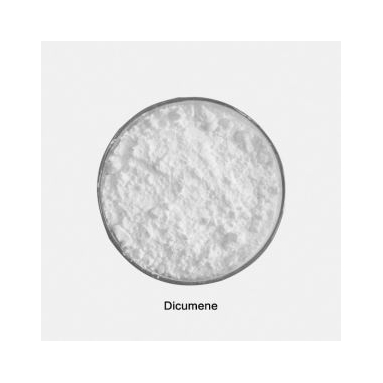 Dicumene may be reviewed in projects involving selected polymer-processing and flame-retardant formulation systems. Its relevance depends on the complete material package and the specific target property. The most useful starting point is not to ask whether one additive “works” in general, but to define the resin, primary flame retardant, process conditions, finished-part requirements, and applicable test method.
Polystyrene, EPS and XPS Development Projects
Polystyrene, expanded polystyrene (EPS), and extruded polystyrene (XPS) projects may require careful control of density, cell structure, additive dispersion, thermal history, and finished-part geometry. In foam systems, changes in formulation or processing can influence not only fire behavior but also expansion characteristics, surface quality, dimensional stability, and mechanical performance.
- Confirm the polystyrene grade, resin additives, and intended foam density.
- Define whether the project concerns EPS, XPS, compact polystyrene, or another modified polystyrene system.
- Review the primary flame-retardant package and its expected compatibility with the resin and processing method.
- Control specimen thickness, density, conditioning, and orientation before comparing fire-test results.
Polypropylene Flame-Retardant Compounding Projects
Polypropylene flame-retardant formulations can involve different challenges from polystyrene systems. The final result may depend on the selected PP grade, filler level, reinforcing fiber content, impact-modifier package, pigment system, and processing temperature. Mechanical-property retention, flow behavior, warpage, surface appearance, and moldability should be reviewed alongside flame performance.
- Document the PP grade, melt flow, reinforcement level, and existing additive package.
- Review how the primary flame retardant and synergistic components affect dispersion and processing behavior.
- Monitor extrusion pressure, melt temperature, torque, and throughput during compound development.
- Use the actual final-part geometry when planning flame and mechanical validation.
Other Polymer Systems Requiring Technical Screening
Some projects may involve polymer blends, masterbatches, specialty compounds, or reactive processing routes. In these cases, the material under evaluation should be screened against the actual resin system and intended processing conditions. Results from one polymer family should not be assumed to transfer directly to another without technical verification.
Define the Performance Target Before Selecting a Synergist
Before introducing a synergistic component into a flame-retardant formulation, the project team should define what “success” means. A flame rating alone is usually not enough. The finished material may also need to meet requirements for mechanical strength, density, surface quality, color, odor, electrical behavior, thermal stability, processability, and regulatory suitability for its target market.
Identify the Applicable Fire-Test Method
Flame-retardant performance must be judged against the test method relevant to the intended application. Different methods measure different aspects of material behavior. A result from one test does not automatically predict performance in another test or in a finished product with a different geometry.
- Define the relevant standard before laboratory screening begins.
- Use controlled specimen thickness and conditioning procedures.
- Record whether the material is tested as a plaque, molded part, foam, sheet, cable compound, or another final format.
- Compare results only when the resin grade, processing history, sample dimensions, and testing conditions are documented.
Match the Formulation Target With Finished-Part Geometry
Part thickness, density, surface area, orientation, and internal structure can all influence observed flame behavior. This is particularly important in foamed polymers and filled compounds. A formulation that passes a small laboratory screen may need further validation when converted into a thicker, thinner, denser, or differently shaped commercial part.
Set Mechanical, Processing and Appearance Requirements
Flame-retardant polymer development should balance multiple targets. If a formulation improves one fire-test metric but creates unstable extrusion, poor mold filling, unacceptable odor, surface defects, brittle behavior, or inconsistent density, it may not be suitable for commercial use. Defining these trade-offs early reduces unnecessary reformulation work later.
Key Variables in Dicumene Evaluation
When 2,3-Dimethyl-2,3-Diphenylbutane is included in an early formulation screen, the result should be assessed at system level. The base resin, primary flame retardant, additive dispersion, thermal history, specimen geometry, and test method can each affect the observed performance.
Base Polymer Selection and Formulation Compatibility
Resin grade influences melt viscosity, additive wetting, dispersion, thermal stability, and finished-material properties. Formulators should document the polymer grade and related materials before comparing trial results.
- Resin type and grade
- Melt flow rate or melt index
- Molecular-weight distribution where available
- Filler, pigment, stabilizer, and impact-modifier package
- Virgin, recycled, or blended resin content
- Expected production method and target part geometry
Primary Flame Retardant and System Balance
A synergistic component should be evaluated together with the selected primary flame retardant rather than in isolation. The type of flame-retardant chemistry, formulation ratio, dispersion quality, and processing stability can influence the final material response. It is not technically reliable to assume that one fixed synergist level will produce the same result across different resin grades, equipment, or end-use requirements.
Dispersion, Feed Sequence and Compounding Method
Inconsistent dispersion can cause variable flame-test outcomes, uneven appearance, mechanical-property variation, and process instability. The way materials are introduced to the extruder or mixer is therefore a core part of the evaluation.
- Confirm whether materials are dry blended, pre-compounded, masterbatched, or side-fed.
- Review feeder accuracy, powder flow, premix homogeneity, and moisture exposure.
- Document screw configuration, mixing zones, venting, throughput, and residence-time conditions.
- Inspect intermediate material and final specimens for visible agglomeration or surface defects.
Processing Temperature, Residence Time and Thermal History
Nominal barrel temperatures do not always represent actual melt temperature. Frictional heating, screw design, output rate, pressure, polymer viscosity, and cooling conditions may change the thermal history of the material. For meaningful comparison, process teams should record the actual or estimated melt conditions during every trial.
Part Thickness, Density and Conditioning Before Testing
Specimen preparation affects the credibility of flame-retardant test comparisons. Differences in thickness, density, moisture conditioning, surface finish, molding orientation, and foam structure can produce different observed outcomes even when the nominal formulation is unchanged.
Comparing Flame-Retardant Formulation Evaluation Approaches
Early formulation work should use a testing sequence that fits the project stage. A rapid screen can identify promising directions, but it cannot replace pilot-scale compounding and application-specific validation.
| Evaluation Area | Questions to Ask | Typical Measurements | Risk of Ignoring It |
|---|---|---|---|
| Base polymer | Which resin grade and melt behavior are involved? | Melt flow, density, filler level, resin additives | Inconsistent compounding and non-comparable test results |
| Flame-retardant package | Which primary flame retardant is being evaluated? | Formulation ratio, dispersion and thermal stability | Incorrect conclusions about synergy |
| Processing | What are the actual extrusion or molding conditions? | Melt temperature, pressure, residence time and throughput | Degradation, poor dispersion or processing instability |
| Test specimens | Are specimen thickness and conditioning controlled? | Thickness, density, orientation and conditioning history | Results that cannot be compared reliably |
| Final validation | Which fire and mechanical standards apply? | Relevant fire tests and mechanical-property testing | Passing one screen but failing end-use requirements |
Screening Trials Versus Pilot Compounding Trials
Laboratory screening is useful for comparing a controlled set of variables. It can help a team identify whether a formulation direction is worth further work. However, small-scale mixing and specimen preparation may not reproduce industrial feeding, shear, residence time, thermal profile, or dispersion behavior.
Pilot compounding provides a more realistic view of processing stability. It can reveal changes in feeder performance, pressure, torque, throughput, melt quality, strand appearance, pellet quality, or molding behavior. A promising laboratory result should therefore be treated as a starting point for scale-up, not a final conclusion.
Vertical Burn Testing Versus Cone Calorimetry
Different flame tests answer different questions. A vertical burn method may provide a focused screening result under a defined specimen geometry, while cone calorimetry can provide additional information related to heat release and burning behavior. The applicable method depends on the intended market, material category, and end-use requirement.
Test results should always be interpreted within the conditions of the relevant standard. A result from one method, thickness, or conditioning protocol should not be generalized to all applications without additional validation.
Why Multiple Results Are Needed Before Formulation Decisions
Flame-retardant performance, processability, appearance, and mechanical behavior can move in different directions. A practical development plan should collect enough information to understand these trade-offs. This often includes process records, fire-test data, physical properties, visual inspection, density measurements, and repeated trials using consistent procedures.
Common Problems During Flame-Retardant Polymer Development
Inconsistent Flame-Test Results
When repeated specimens show variable results, the root cause may be sample thickness, density variation, poor additive distribution, inconsistent processing temperature, resin-batch differences, moisture conditioning, or differences in test preparation. Before changing the formulation, verify whether the test specimens and processing records are comparable.
Poor Additive Dispersion
Poor dispersion may lead to visible particles, local concentration differences, surface defects, variable mechanical performance, and unpredictable fire-test behavior. The development team should review powder handling, premix quality, feeding order, screw configuration, melt mixing, and the compatibility of the full additive package.
Reduced Mechanical Properties
Flame-retardant formulations may alter tensile strength, elongation, impact performance, flexural behavior, or dimensional stability. The project should define which properties are critical for the final application and test them alongside fire performance. A formulation cannot be judged solely by its flame behavior if it no longer meets the mechanical requirements of the finished part.
Unstable Extrusion or Molding Behavior
Pressure variation, die buildup, surface roughness, strand breakage, poor pellet quality, mold deposit, or poor mold filling may indicate an issue with the overall formulation and process window. The response should include a review of melt temperature, residence time, additive stability, feeder performance, and material dispersion.
Assuming a Fixed Additive Ratio Will Work Across Different Polymers
It is not reliable to transfer a formulation ratio directly from one resin grade, polymer family, equipment line, or final-part geometry to another. Each formulation should be evaluated against its own resin, flame-retardant package, processing conditions, and performance targets.
Typical Example: Screening a Synergist in an EPS Flame-Retardant Project
This typical example shows how an EPS development team may structure an early screening process. It is an illustrative technical scenario and does not represent a guaranteed formulation result.
Background: A polymer development group was reviewing a flame-retardant EPS formulation for an insulation-related application. The project required the team to balance foam density, cell structure, process stability, and the fire-performance target defined for the intended product format.
Challenge: Early formulations produced inconsistent test specimens. Density varied between samples, and the team could not determine whether changes in flame behavior were caused by the synergistic component, foam structure, primary flame-retardant dispersion, or specimen preparation differences.
Solution: The team prepared controlled formulations using the same EPS grade and primary flame-retardant package, then evaluated Dicumene, also known as 2,3-Dimethyl-2,3-Diphenylbutane, under documented compounding and specimen-conditioning conditions. Resin grade, foam density, feed sequence, processing records, specimen thickness, and test conditioning were tracked for each trial.
Result: The team obtained a more comparable data set for selecting the next formulation direction. The project moved to additional pilot evaluation, while final flame performance, mechanical properties, processing suitability, and regulatory acceptance remained subject to the developer’s own finished-product testing and target-market requirements.
Questions Technical Buyers Ask Before Material Qualification
Which Data Should Be Prepared Before a Synergist Evaluation?
Prepare the polymer type and grade, melt-flow information where available, primary flame-retardant package, expected processing method, target application, finished-part geometry, target market, required fire-test standard, and any mechanical or appearance requirements. These inputs help create a meaningful trial plan instead of a general screening exercise.
Why Can the Same Formulation Perform Differently After Scale-Up?
Scale-up can change feeding accuracy, shear, residence-time distribution, actual melt temperature, pressure, cooling conditions, dispersion, pellet quality, and final-part processing. Laboratory and pilot results should therefore be compared carefully before commercial conclusions are made.
Does a Successful UL 94 Result Prove Suitability for Every End Use?
No. A successful result under one UL 94 test configuration does not automatically establish suitability for a different thickness, part geometry, density, product category, market, or end-use condition. Additional application-specific testing may be necessary.
How Should a Synergist Be Evaluated With a Brominated Flame Retardant?
The complete system should be screened under controlled conditions. Review the selected polymer, primary flame retardant, formulation ratio, dispersion method, processing profile, specimen preparation, and applicable test method. Do not assume that a ratio from another polymer system or equipment line will provide the same result.
Is Dicumene the Same Material as 2,3-Dimethyl-2,3-Diphenylbutane?
Dicumene is a common name associated with 2,3-Dimethyl-2,3-Diphenylbutane. For technical comparison, teams should confirm the current product identity and documentation before laboratory or pilot-scale testing.
Zhufeng Chem for Dicumene Polymer Formulation Review
Wuxi Zhufeng Fine Chemical Co., Ltd. supplies specialty chemical materials for selected polymer-processing and flame-retardant formulation projects. Zhufeng Chem can provide product-specific information and available documentation to support material review, sample discussion, packaging confirmation, and supply planning for technical projects.
After a formulation team has defined its evaluation conditions, it can review 2,3-Dimethyl-2,3-Diphenylbutane technical product information for material identity, available documentation, and supply-related details.